Jelly Force Ingredients: The Five Named on the Artwork
Jelly Force names five ingredients on its own artwork: muira puama, maca, catuaba, ashwagandha and L-arginine.
Maca and L-arginine have human trials behind them, run at gram doses. The amount of each ingredient per gummy is not published.
For the one figure the jar prints, see the supplement facts.
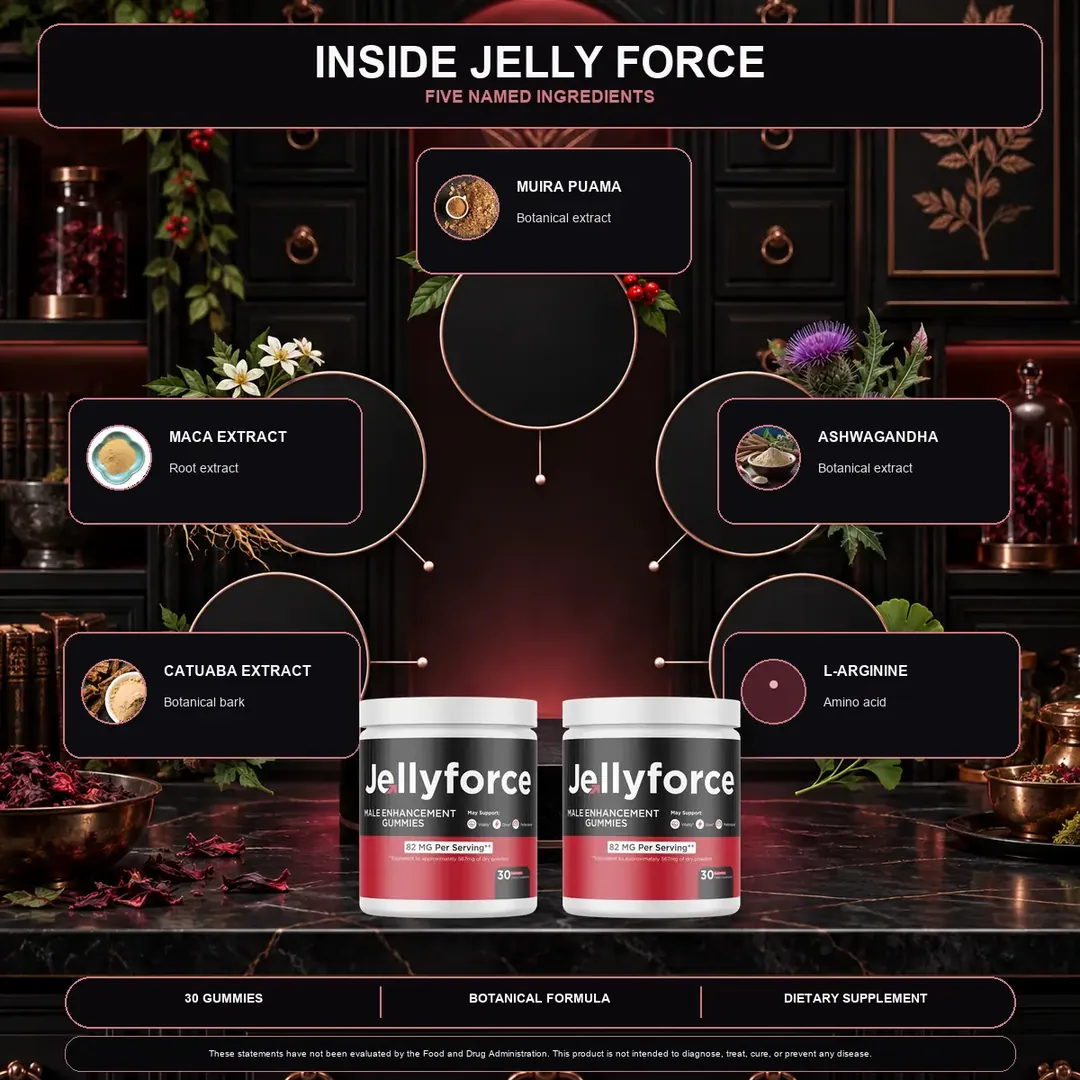
Five names, one unanswered question: how much of each
Five names appear on the seller's own ingredient artwork: muira puama, maca, catuaba, ashwagandha and L-arginine, in that order. That is the shortest of the four published lists. The official sales page, a brand press release and a published label review each name more, and none of the four agree. That disagreement is covered in full on what is actually in it.
What follows treats each of the five on its own: what it is and what the human evidence shows. No amount is published for any of them, and that gap runs through every entry below.
Compare the five, one at a time
Muira Puama Extract
Ptychopetalum olacoides · bark and root
A clinical review says outright that very limited literature exists on it for erectile function. A 2021 clinical review states outright that 'very limited literature exists on the effects of muira puama on erectile function' and that the one human study available used a multi-ingredient combination product, not muira puama alone, so no single-ingredient human efficacy conclusion can be drawn.
- In one serving
- Inside the 82 mg serving (amount not published)
- Dose used in research
- No controlled human dose-response trials exist. The most-cited human data point is an uncontrolled observational study
- Safety note
- No controlled human trials of muira puama alone exist, and one monograph states directly that 'information regarding adverse reactions to muira puama is lacking.' Reported mild effects in combination products include stomach upset, headache, and nervousness.
Maca Extract
Lepidium meyenii · root
The best-studied name on the list, at doses measured in grams rather than milligrams. Two independent systematic reviews (2010, covering sexual function broadly; 2023, specific to ED) each found only a handful of qualifying RCTs (4 and 2, respectively) and both explicitly rated the evidence as too limited, low-certainty, or insufficient to draw firm conclusions, despite some statistically positive pooled results.
- In one serving
- Inside the 82 mg serving (amount not published)
- Dose used in research
- Randomized controlled trials for sexual function/erectile dysfunction have used roughly 1.2-3 g/day
- Safety note
- No major safety signal emerged in the systematic reviews located, and maca is generally considered well tolerated at studied doses.
- Sources
- Shin et al., 2010 · Lee et al., 2023
Catuaba Extract
sold as Erythroxylum catuaba · bark
The most careful study of it found most commercial catuaba is a different bark entirely. This is essentially absent evidence, and that absence is itself a documented finding, not a gap in this file's research.
- In one serving
- Inside the 82 mg serving (amount not published)
- Dose used in research
- not applicable -- no human efficacy dose-ranging studies exist for catuaba's effect on sexual function
- Safety note
- No controlled human safety data exists specifically for catuaba because no controlled human efficacy data exists either.
- Sources
- Kletter et al., 2004 · RxList et al., 2026
Ashwagandha
Withania somnifera · root
Real literature on stress and sleep, and a documented liver-injury signal worth knowing about. The single located randomized trial testing ashwagandha specifically for male sexual performance (rather than stress/testosterone generally) used 600 mg/day in 50 healthy men without diagnosed ED for 8 weeks -- a small, single-trial result, not evidence in men with actual erectile dysfunction.
- In one serving
- Inside the 82 mg serving (amount not published)
- Dose used in research
- Human trials of ashwagandha for stress, well-being, or sexual performance/testosterone most commonly use 300-600 mg/day of a standardized root extract
- Safety note
- LiverTox and multiple published case reports document a real, if uncommon, idiosyncratic liver-injury risk with ashwagandha -- typically presenting as jaundice and pruritus 2-12 weeks after starting the product, usually mild-to-moderate and reversible on stopping, but with rare fatal acute liver failure reported, disproportionately in people with pre-existing liver disease.
L-Arginine
L-arginine · amino acid
The one ingredient with a plausible mechanism, studied at one and a half to five grams a day. A pooled meta-analysis of 10 RCTs found L-arginine improved subjective erectile-function ratings versus placebo, the strongest single-ingredient signal of the five botanicals on this label -- but the entire studied range (1.5-5 g/day) sits 2.6 to 8.8 times above this product's entire 567 mg dry-powder-equivalent blend for all five ingredients combined, before L-arginine's own undisclosed share of that total is considered.
- In one serving
- Inside the 82 mg serving (amount not published)
- Dose used in research
- Randomized controlled trials for erectile dysfunction/vascular endothelial function most commonly use 1.5-5 g/day
- Safety note
- L-arginine can lower blood pressure through nitric-oxide-mediated vasodilation, which is the basis for its studied ED benefit but also the basis for a real interaction risk: it should not be combined with nitrate medications or PDE5-inhibitor ED drugs without medical supervision, given the risk of an additive, dangerous blood-pressure drop.
- Sources
- Mayo et al., 2026 · Srivatsav et al., 2021
The "in one serving" line is the same for all five because it has to be: the jar prints one combined number, not five separate ones.
Maca: real research, at doses this jar cannot reach
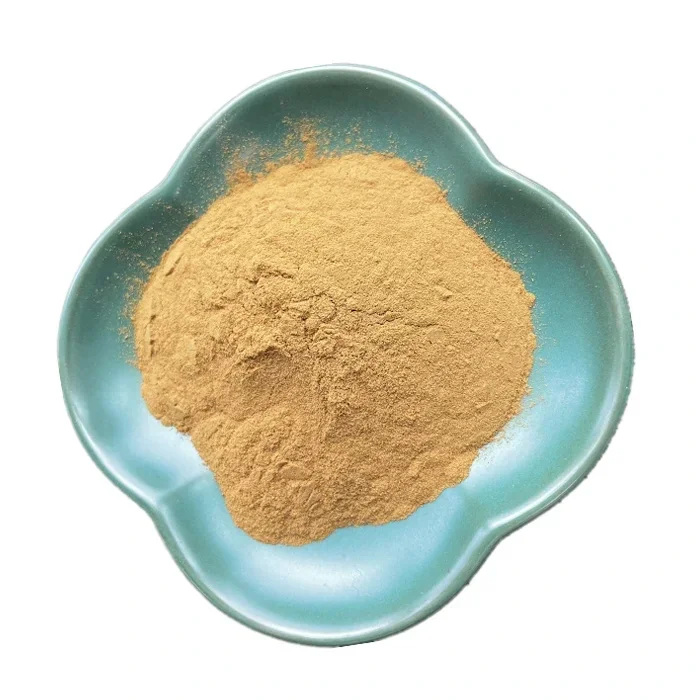
Maca · Lepidium meyenii
Maca is a root vegetable grown at high altitude in Peru, dried and ground into a powder or extract. It is the best-studied name on this label, and the only one with more than one systematic review behind it.
A 2010 systematic review found just four randomized controlled trials of maca for sexual function and called the evidence "limited," too small and low-quality to draw firm conclusions Shin et al., 2010. A narrower 2023 meta-analysis, restricted to erectile dysfunction, pooled just two trials and found a statistically significant improvement, but rated the certainty as low and called for larger trials Lee et al., 2023.
Those two trials used 1,200 mg a day for eight weeks and 2,400 mg a day for twelve weeks — for maca alone. Jelly Force's entire serving, all five ingredients combined, is printed at 82 mg of extract, or at most 567 mg read as dry-powder equivalent. Maca's own undisclosed share of that total is smaller still.
Muira puama: no single-ingredient human trial found
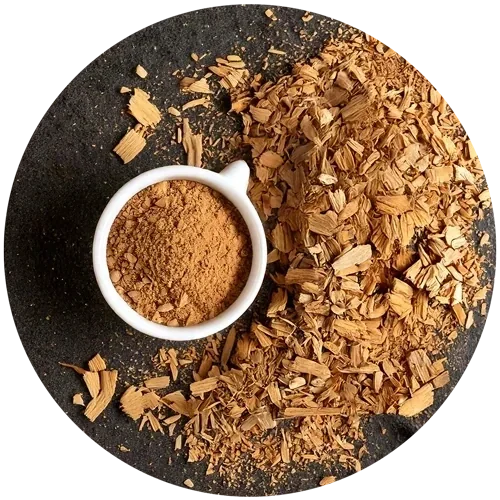
Muira Puama · Ptychopetalum olacoides
Muira puama is a shrub native to the Brazilian Amazon, traditionally used as a bark and root preparation. It is the ingredient this desk can say the least about.
A 2021 clinical review of aphrodisiac ingredients used for erectile dysfunction states outright that "very limited literature exists on the effects of muira puama on erectile function" Srivatsav et al., 2021. The one rat study it found showed a benefit only in combination with other ingredients, not alone. The one human study it could locate used a multi-ingredient commercial product with L-citrulline and other actives, so the review says no single-ingredient human conclusion can be drawn from it.
A separate pharmacist-reviewed monograph is just as direct: "clinical trial data are lacking to recommend use for any indication," and specifically, "clinical trials are lacking to support effects of P. olacoides alone on sexual dysfunction" Drugs.com et al., 2026. In plain terms: no single-ingredient human trial of muira puama has been found. A commonly cited concentrate range of 500 to 1,500 mg a day comes from an uncontrolled observational study, not a placebo-controlled trial, and that range alone already exceeds the entire five-ingredient blend in one gummy.
Catuaba: most of what is sold under that name is a different bark
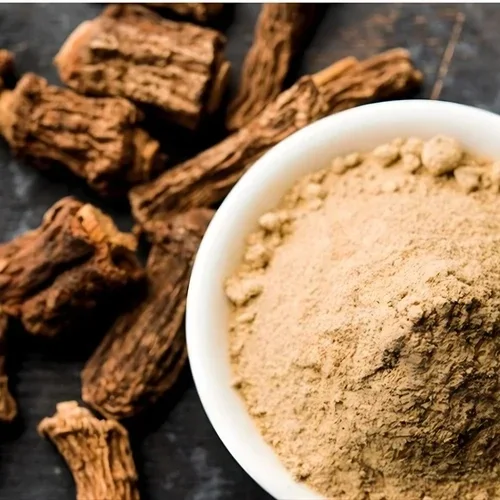
Catuaba · sold as Erythroxylum catuaba
Catuaba is not one standardized plant. It is a folk name for bark from several unrelated Brazilian trees, most often Trichilia catigua or Erythroxylum vaccinifolium.
The most rigorous study located tested that mismatch directly. Examining 14 commercial "catuaba" samples, the authors found only a minority actually contained the species claimed on their own labels; most were a different tree, Trichilia catigua, sold under the catuaba name Kletter et al., 2004. They then tested extracts from those samples in rabbit corpus cavernosum tissue, the standard laboratory assay for erectile-tissue relaxation. The result: no effect from any preparation tested, at the bench, before human trials would even begin.
A separate monograph rates catuaba's evidence for male sexual performance as "Insufficient Evidence to Rate Effectiveness" and says there is not enough science to determine an appropriate dose range at all RxList et al., 2026. An independent overview confirms the traditional aphrodisiac claims "have not been confirmed in scientific studies" Wikipedia et al., 2026. No dose of catuaba has been shown to do anything in a controlled setting, and no test tells a buyer which bark is actually in a given jar.
Ashwagandha: a real trial, and a real liver-injury signal
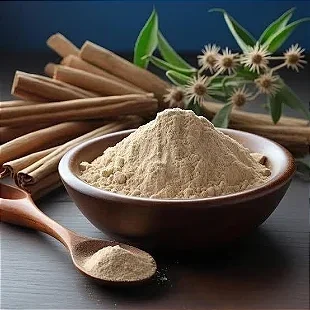
Ashwagandha · Withania somnifera
Ashwagandha is a root used in Ayurvedic tradition, sometimes sold as "Indian ginseng" though it is botanically unrelated to ginseng. Of the five, it has the clearest single trial aimed at sexual performance, and the clearest documented safety concern.
An 8-week randomized, placebo-controlled trial in 50 healthy men without diagnosed sexual dysfunction found 600 mg a day of a standardized root extract improved self-reported sexual well-being scores versus placebo Chauhan et al., 2022. That is one small trial in healthy volunteers, not men with diagnosed erectile dysfunction, and outside commentary has noted higher-quality evidence is still needed.
Separately, LiverTox documents roughly two dozen published cases of liver injury linked to ashwagandha since 2017, typically jaundice and itching two to twelve weeks after starting the product, most resolving after stopping it but with rare fatal acute liver failure reported National Institute of Diabetes and Digestive and Kidney Diseases (LiverTox), 2023. Germany's federal risk-assessment body has cited these case reports as a reason for caution, and several other European countries have restricted ashwagandha products Nutraceuticals et al., 2026. That trial dose, 600 mg a day of ashwagandha alone, already exceeds this jar's entire 567 mg dry-powder-equivalent figure for all five ingredients combined.
L-Arginine: the one plausible mechanism, and a real dose ceiling
L-Arginine
L-arginine is not a botanical. It is an amino acid the body uses to build nitric oxide, which relaxes blood vessels. That mechanism is the most plausible one on this label, covered in depth on how it works.
A pooled meta-analysis of ten randomized controlled trials found L-arginine improved subjective erectile-function ratings against placebo, the strongest single-ingredient signal here Srivatsav et al., 2021. In one trial behind that pooled result, 31% of men taking 5,000 mg a day reported improvement, against 12% on placebo. Doses across the pooled trials commonly ran 1,500 to 5,000 mg a day.
Dose matters for a second reason. The VINTAGE MI trial gave 9,000 mg a day of L-arginine to patients recovering from a heart attack and stopped early on safety grounds: six-month mortality was significantly higher on L-arginine than placebo Schulman et al., 2006. That is a different population and dose than one gummy, but it shows L-arginine is not uniformly harmless at high amounts, particularly for anyone with heart disease.
Jelly Force's entire serving is 567 mg for all five ingredients, at its most generous reading. The low end of L-arginine's own studied range alone is 1,500 mg.Side by side, and the gap that runs under all five
| Ingredient | What it is | Best human evidence | Amount in this jar |
|---|---|---|---|
| Muira Puama | Amazonian shrub, bark and root | No single-ingredient human trial found | Not published |
| Maca | Andean root, dried and powdered | Two small RCTs, low-certainty positive result | Not published |
| Catuaba | Folk name for several different tree barks | No effect in the standard lab assay; most commercial catuaba is misidentified | Not published |
| Ashwagandha | Ayurvedic root | One small RCT positive; documented liver-injury signal | Not published |
| L-Arginine | Amino acid, not a botanical | Pooled meta-analysis positive at gram doses; safety ceiling in heart patients | Not published |
No amount is published for any of these five, individually or as a group beyond the single combined 82 mg / 567 mg figure — true whether the evidence is strong, weak or absent. More on the missing panel and what is actually in it.
Before you take any of the five
On heart or blood pressure medicine
L-arginine and several of these botanicals act on blood pressure. Ask a doctor or pharmacist before taking anything sold for sexual performance, including this one.
On liver disease
Ashwagandha carries a documented liver-injury signal. Anyone with existing liver disease, or who develops jaundice, dark urine or itching, should stop and see a clinician.
New or worsening erectile difficulty can be an early marker of cardiovascular disease or diabetes, worth a doctor's visit rather than a different gummy. More on who this is for and side effects.
Ingredients: common questions
How many ingredients does Jelly Force actually have?
Five, on the seller's own artwork. The sales page names six, a brand press release names eight, and a published label review names nine. See what-is-actually-in-it for the full comparison.
Which ingredient has the best evidence?
L-arginine has the strongest pooled evidence, at gram doses. Maca and ashwagandha each have a small positive trial. Muira puama has no single-ingredient human trial, and catuaba has none at all.
Is catuaba even a real, consistent ingredient?
Not reliably. The most careful study found most commercial catuaba is the bark of a different tree sold under the same folk name, with no effect in the standard lab assay.
Has muira puama been tested in people?
Not alone. The one human study used a multi-ingredient product with several other actives, so no single-ingredient conclusion can be drawn.
How much of each ingredient is in one gummy?
Not published. The jar prints one combined figure, 82 mg of extract, footnoted as about 567 mg of dry-powder equivalent, for all five ingredients together.
Is ashwagandha safe?
It has a documented, if uncommon, liver-injury signal. Most cases are mild and resolve after stopping it, but rare fatal cases exist, and some European regulators have restricted ashwagandha on that basis.
Does L-arginine interact with anything?
It can lower blood pressure and should not be combined with nitrates or PDE5-inhibitor drugs without medical advice. A trial in recent heart-attack patients was stopped early over a safety signal at high doses.
Why does the amount matter if the ingredients are natural?
Because each of these five has been studied at a dose usually measured in grams, while this jar's serving is measured in milligrams. Below the studied range, nobody can say what an ingredient does.
Keep reading
What is actually in it
Four published sources name five, six, eight and nine ingredients. See exactly where they agree and disagree.
Read →The missing Supplement Facts panel
What a real panel would have to show, and why the one number this jar prints cannot answer that.
Read →How it works
The mechanism each ingredient is studied for, and why no trial of this actual product exists.
Read →Order Jelly Force from the authorized retailer
60 servings per bottle, 1 to 2 droppers a day. Kits of 2, 3 or 6 bottles run from $49 a bottle on the sales page, with a 60-day money-back guarantee. Questions first? Call +1 (302) 200-3480.