Jelly Force Supplement Facts: What the Jar Prints
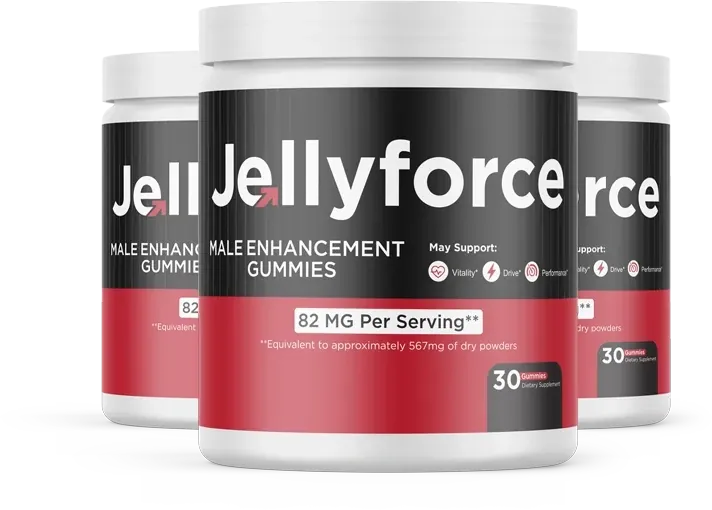
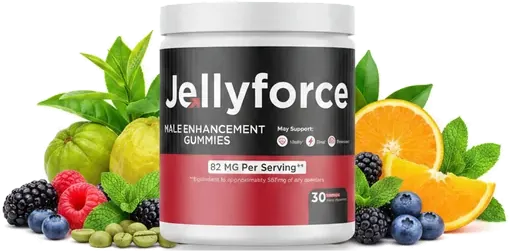
The Jelly Force jar prints one figure: 82 mg per serving.
That is about 567 mg of dry-powder equivalent, shared by the named botanicals. The amount of each ingredient is not split out.
The page about a panel that does not exist
Most pages on this desk open by walking through a product's Supplement Facts panel. This page cannot do that, because there is not one to walk through. We hold no panel for Jelly Force, and the official page we could reach publishes none either.
What follows is what a real panel is legally required to contain, what this jar prints instead, and why a single combined number cannot be evaluated the way a real panel can.
What the law requires a panel to say
What a Supplement Facts panel is required to show
Under US labeling rules, a dietary supplement is required to carry a Supplement Facts panel that states the serving size, the number of servings per container, and then, ingredient by ingredient, how much of each one a serving contains, in a standard unit like milligrams. Where several botanicals are combined into one proprietary blend, the rule still requires the total weight of that blend to be declared, and the individual botanicals inside it to be listed by name, in descending order by weight.
That structure exists so a buyer, or a doctor, or a pharmacist checking for an interaction, can look at one panel and know two things: what is in the product, and how much. Neither question can be answered from what Jelly Force actually prints.
Side by side: the requirement and the label
| What a real panel shows | What Jelly Force prints instead |
|---|---|
| Serving size and servings per container | 30 gummies per jar; one gummy per serving, per published listings |
| Every ingredient, listed by name | Five names on the seller artwork; six, eight or nine depending on the source read |
| Amount of each ingredient in the serving | Not published. No amount for any single ingredient anywhere. |
| Total blend weight, if proprietary | 82 mg, footnoted “equivalent to approximately 567mg of dry powders” |
| Order of ingredients by weight | Cannot be confirmed. The printed order may or may not reflect actual weight. |
| Daily value or percent where one exists | Not printed for any ingredient |
82 mg per serving, footnoted 567 mg of dry-powder equivalent, is everything printed. It is one combined figure for the whole formula, not a Supplement Facts panel, and not a substitute for one.
The one number this jar prints, against what trials actually used
The bar is the whole serving at its most generous reading: 567 mg of dry-powder equivalent, not the 82 mg of extract actually printed, and not divided between the ingredients. Even measured that way it does not reach the bottom of the studied range for a single one of them.
Maca
2.1× more567 mgthe entire serving, all ingredients1,200 to 3,000 mga day in trialsWhat those trials measured: sexual desire and function, in small trials.
L-Arginine
2.6× more567 mgthe entire serving, all ingredients1,500 to 5,000 mga day in trialsWhat those trials measured: endothelial function and erectile function.
Muira Puama
0.9× more567 mgthe entire serving, all ingredients500 to 1,500 mga day in trialsWhat those trials measured: almost nothing: no single-ingredient human trial found.
Ashwagandha
0.5× more567 mgthe entire serving, all ingredients300 to 600 mga day in trialsWhat those trials measured: stress, sleep and some male fertility markers.
Catuaba is missing from this chart because there is no studied dose to chart it against.
This is the most generous reading possible
567 mg, not the 82 mg actually printed on the jar, and the whole serving credited to one ingredient at a time rather than split five ways. Both choices favor the product, and it still does not clear a single bar.
Catuaba has no bar to draw
There is no studied dose to measure it against. See the ingredient breakdown for why.
What that footnote actually claims, and what it does not
What "equivalent to approximately 567mg of dry powders" actually means
Extracts are concentrated. A manufacturer starts with raw dried plant material, the dry powder, and processes it down into a smaller amount of extract. The footnote is doing that arithmetic in reverse: it is telling you that the 82 mg of extract blend printed on the front is roughly what you would get if you started with 567 mg of dried, unprocessed plant material and reduced it to an extract.
That is a claim about concentration ratio, not about potency or effect. It does not mean the product delivers the same result as 567 mg of raw powder would. It also does not change the fact that 567 mg, read as generously as possible and credited entirely to one ingredient, still falls short of the low end of the human trial doses for maca, L-arginine, ashwagandha or muira puama individually. The conversion explains a number. It does not supply the number the label is actually missing, which is how much of any one botanical is present.
Why the split cannot be evaluated, even generously
Why an undisclosed split cannot be evaluated
Even taking 567 mg at face value, that figure has to be divided between five named ingredients on the shortest published list, or as many as nine on the longest. Nobody publishes how that division works. It could be close to even. It could be almost entirely one ingredient with trace amounts of the rest. Both are consistent with the one number printed, and there is no way to tell which.
This matters because the evidence for each ingredient is dose-dependent. A pooled meta-analysis found L-arginine helped at 1,500 to 5,000 mg a day Srivatsav et al., 2021, which says nothing about what a few dozen milligrams does, and a few dozen milligrams is the most any one ingredient could realistically get out of a 567 mg total split five or more ways. Without the split, the amount of any single ingredient cannot be checked against its own research, and the research cannot be used to say anything about what this specific jar delivers.
The four published ingredient lists disagree with each other on top of that, which means the split problem is not even a single, fixed unknown. It is an unknown number, divided an unknown number of ways, among a list of ingredients nobody agrees on. That full disagreement is laid out on what is actually in it.
Why the missing panel is not just a formality
For a buyer deciding whether to take it
Without a panel, there is no way to compare this product to the research behind any of its named ingredients. The comparison this page runs is the most favorable one possible, and it still does not close the gap.
For a doctor or pharmacist checking an interaction
A clinician checking for an interaction with nitrates, blood pressure medicine or a liver condition needs to know what is in a product and how much. Neither is available here.
If you take nitrates, blood pressure medicine or anything for a heart condition, speak to your doctor or pharmacist before taking anything sold for sexual performance, including this one. FDA warns that sexual-enhancement supplements are the category most often found to carry undeclared prescription drugs U.S. et al., 2026, and a missing panel is one more thing a buyer cannot check. More on hidden drug ingredients.
Supplement Facts: common questions
Does Jelly Force have a Supplement Facts panel?
Not one we hold, and not one the official page we reached publishes. The only quantity printed anywhere is 82 mg per serving, footnoted as about 567 mg of dry-powder equivalent.
Is 82 mg per serving the same as a Supplement Facts panel?
No. It is one combined number for the whole formula. A real panel lists every ingredient separately with its own amount, which this label does not do.
What does 'equivalent to approximately 567mg of dry powders' mean?
It is a concentration-ratio claim: the extract printed is roughly what you would get by processing that much raw, dried plant material. It says nothing about how that weight is split between ingredients.
How is 567 mg split between the five ingredients?
That is not published. It could be close to even or almost entirely one ingredient with traces of the rest, and there is no way to tell which from what is printed.
Why can't you just estimate each ingredient's share?
Because any estimate would be invented, not reported. This desk does not publish figures nobody has disclosed.
Is a proprietary blend legal without individual amounts?
A blend can be declared as a total weight, but the law still requires the ingredients inside it to be named and listed by weight order. Jelly Force's own jar artwork gives neither an amount nor a confirmed order.
Does the missing panel mean something is wrong with the product?
It means a buyer cannot check the formula against the research, which is the entire point of a panel. It is not evidence of anything being added or removed.
What should I actually check when my order arrives?
Read the jar itself. It is the only panel anyone can verify, and if it differs from anything on this page, the jar is the one to trust.
Keep reading
The five named ingredients
What each botanical is, and what the human evidence actually shows for it.
Read →What is actually in it
Four published sources, four different ingredient lists, and no panel to check any of them against.
Read →Side effects and interactions
What can go wrong with these ingredients, and who should talk to a doctor before taking any of them.
Read →Order Jelly Force from the authorized retailer
60 servings per bottle, 1 to 2 droppers a day. Kits of 2, 3 or 6 bottles run from $49 a bottle on the sales page, with a 60-day money-back guarantee. Questions first? Call +1 (302) 200-3480.