Jelly Force Side Effects: What to Check Before You Start
Most of what to watch with Jelly Force comes from two ingredients: L-arginine and ashwagandha.
L-arginine can lower blood pressure and interacts with nitrates, and ashwagandha has a documented liver-injury signal. Anyone on nitrates or heart medication should ask a doctor first.
Check who it suits before you order.

Why this page is cautious
This page carries more warnings than most on this site, and that is deliberate. Jelly Force sits in the sexual-enhancement supplement category, which independent research has found adulterated with undeclared prescription drugs more often than any other supplement category FDA tracks (Tucker et al., 2018). We are not saying that happened here. We have no test result for this jar, and we make no claim about what it does or does not contain beyond the label. What we can do is explain why the category itself calls for caution, walk through what is known about each named ingredient, and be plain about what we cannot assess because no amount of anything is published.
None of this is a reason to feel singled out. It is the same conversation a pharmacist would want to have with anyone reaching for a product like this one.
Nitrates: the interaction that matters most
If you take a nitrate for chest pain or heart disease, this is the one section on the whole site to read before anything else. Nitrate drugs, such as nitroglycerin, already relax and widen blood vessels. Sildenafil, tadalafil and their close chemical relatives, the active ingredients behind Viagra and Cialis, work on the same pathway. Taken together, the combination can drop blood pressure to dangerous levels, sometimes suddenly (U.S. et al., 2026).
That mechanism is not theoretical for this category. FDA runs a standing public-notification programme because it keeps finding sexual-enhancement products, sold as herbal, that actually contain undeclared sildenafil, tadalafil or an analogue of one of them (U.S. et al., 2026). One independent lab survey of 102 retail sexual-enhancement products found 67 percent adulterated with at least one undeclared PDE5 inhibitor, and 42 percent of the adulterated products carried a dose at or above what a doctor would prescribe (Fischer et al., 2023). Someone taking a gummy they believe is botanical has no way to know they need to think about a nitrate interaction at all.
We hold no test result showing Jelly Force does or does not contain anything undeclared. The point stands regardless: a product with no published panel gives a buyer no way to check, and the base rate across this category is not reassuring. Anyone on nitrates, blood pressure medicine or any heart medicine should talk to a doctor or pharmacist before taking this or any product marketed for sexual performance.
The full category picture, with every figure sourced, is on hidden drug ingredients in this category.
L-arginine and blood pressure: what the VINTAGE MI trial found
L-arginine lowers blood pressure, which is both its proposed benefit and its risk
Of the five named botanicals, L-arginine has the clearest mechanism and the strongest human evidence behind it. A pooled analysis of ten randomized trials found it improved self-reported erectile function versus placebo, working through nitric-oxide-driven vasodilation, the same pathway PDE5 drugs act on downstream of (Srivatsav et al., 2021).
That same mechanism is why L-arginine is not automatically safe for everyone. It should not be combined with nitrate medicine or PDE5 drugs without medical supervision, because the blood-pressure-lowering effects can add together. The clearest warning comes from a different population and a much higher dose: the randomized, placebo-controlled VINTAGE MI trial gave people recovering from a heart attack either placebo or 9 grams of L-arginine a day, and stopped the trial early on safety grounds after six-month mortality came back significantly higher in the L-arginine group, 8.6 percent against zero in placebo (Schulman et al., 2006).
A daily gummy is not 9 grams and this is not a post-heart-attack population. But the trial establishes something that matters here: L-arginine is not a uniformly gentle ingredient for people with cardiovascular disease, which is exactly the group most likely to be drawn to a product marketed for circulation and stamina. Jelly Force publishes no amount of L-arginine at all, so nobody buying it can weigh that dose against either the benefit studies or the VINTAGE MI trial.
Ashwagandha and the liver-injury signal
A real, if uncommon, liver-injury signal
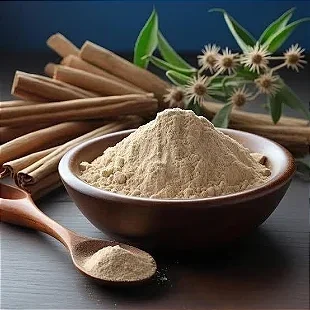
LiverTox, the NIH clinical reference on drug-induced liver injury, documents roughly two dozen published case reports of liver injury tied to ashwagandha since 2017, in adults aged 22 to 75 (National Institute of Diabetes and Digestive and Kidney Diseases (LiverTox), 2023). The pattern typically starts with jaundice and itching two to twelve weeks after starting the product. Most cases were mild to moderate and resolved within a few months of stopping, but LiverTox also records rare fatal acute liver failure, disproportionately in people who already had liver disease.
This is not a fringe concern. Germany's Federal Institute for Risk Assessment has formally cited these case reports as a reason for caution, and several other European countries have separately restricted ashwagandha products, mostly over a related hormonal question (Nutraceuticals et al., 2026). Poland now caps root powder at 3 grams a day.
The one randomized trial testing ashwagandha specifically for sexual performance used 600 mg a day of a standardized extract in 50 healthy men without diagnosed dysfunction (Chauhan et al., 2022). Jelly Force publishes no ashwagandha amount at all, so there is no way to know whether a serving sits anywhere near that studied dose, or whether it carries any measurable liver-injury risk at all. Anyone with liver disease, or anyone who develops fatigue, dark urine, yellowing skin or eyes, or unusual itching while taking this or any ashwagandha-containing product, should stop and see a doctor.
Does Jelly Force contain caffeine? Nobody outside the factory can say for certain
Whether Jelly Force even contains caffeine depends entirely on which published source you trust. A published label review of this formula from 2026 lists 5 mg of disclosed caffeine among nine ingredients. The retailer pack, the official sales page and a brand press release, three other published accounts of the same product, do not mention caffeine at all.
Five milligrams is a small amount on its own, well under a cup of decaf coffee. That is not really the point. The point is that nobody, including us, can currently tell a buyer with certainty whether this product contains a stimulant. If you are sensitive to caffeine, avoid it for a heart condition, or are simply trying to track your intake, that unresolved disagreement is not a technicality you can shrug off. It sits inside the same information gap as everything else on this page: a jar with no Supplement Facts panel gives nobody, buyer or writer, a way to settle the question.
Why the missing amounts make this hard to judge
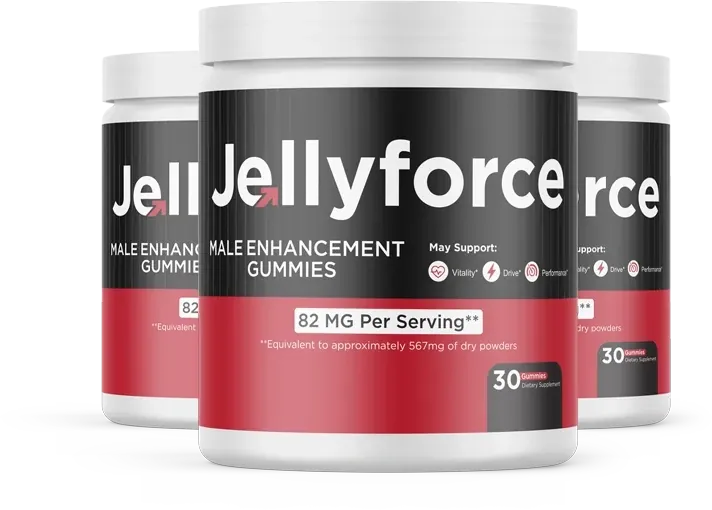
Every safety judgment on this page runs into the same wall: the amount of each ingredient in a Jelly Force gummy is not published anywhere we could find. The jar prints one combined figure, 82 mg of extract, footnoted as about 567 mg of dry-powder equivalent, for all five named botanicals together. No source breaks that number down by ingredient.
That matters for safety, not just for judging whether the product works. A pharmacist checking for an interaction normally starts with a dose. Without one, the honest answer to "how much L-arginine, or how much ashwagandha, is actually in this gummy" is that nobody outside the factory that fills it can say. The table below shows the range each botanical has actually been studied at, against a serving that, even read as generously as possible, comes to 567 mg for all five combined.
| Ingredient | Studied human dose | What that research measured |
|---|---|---|
| Maca | 1,200-3,000 mg/day | Sexual desire and function, in small trials |
| L-Arginine | 1,500-5,000 mg/day | Endothelial function and erectile function |
| Muira Puama | 500-1,500 mg/day | Almost nothing: no single-ingredient human trial found |
| Ashwagandha | 300-600 mg/day | Stress, sleep and some male fertility markers |
| Catuaba | No studied dose exists | The most careful study found most commercial catuaba is a different bark, and the extracts tested showed no effect in the standard tissue assay |
Even the low end of ashwagandha's studied range alone, 300 mg, is already more than half of the entire serving, before the other four ingredients take any share of it. That is the arithmetic behind every caution on this page: we can describe a risk in general terms, but we cannot size it for this specific product, because the one number that would let anyone do that is missing. The full list of everything not published is on the supplement facts page.
How much sugar is in a Jelly Force gummy?
A chewable gummy needs something to hold its shape, and that something is largely sugar. Published listings describe the other ingredients as corn syrup, cane sugar, water, apple pectin, sorbitol liquid, natural flavors, citric acid and sodium citrate dihydrate. We hold no panel of our own to check that list against, so treat it as reported rather than confirmed.
Corn syrup and cane sugar both appear before apple pectin in that list, which on a typical ingredient list usually means they make up a larger share of the gummy than what comes after them. Nobody publishes a sugar figure per gummy, so we cannot tell you a gram count. One gummy a day is a small serving either way, but if you are managing blood sugar closely, have diabetes, or are already counting a nitrate risk factor that overlaps heavily with diabetes and heart disease, that is a reasonable thing to mention to your doctor alongside everything else on this page.
Keep it away from children
Jelly Force gummies look and taste like candy. A jar sitting on a counter or in a bag is not obviously different from a bag of fruit snacks to a small child. The boxed warning on the jar is direct: keep out of reach of children, and do not use if the safety seal is damaged or missing.
Store the jar in a high cupboard, not a bedside table or counter. This product is for healthy adults 18 and over. If a child swallows any amount, call Poison Control or seek emergency care right away.
When to stop and get medical help
Sudden dizziness, fainting or chest pain
These can signal a dangerous blood-pressure drop, especially in anyone on nitrates or heart medicine. Treat this as an emergency and call for help rather than waiting for it to pass.
Jaundice, dark urine, pale stool or unusual itching
These are the early signs LiverTox associates with ashwagandha-linked liver injury. Stop the product and see a doctor promptly rather than waiting to see if it clears on its own.
New or worsening erectile difficulty
This can be an early marker of cardiovascular disease or diabetes, sometimes years before other symptoms. It is worth a medical conversation, not a bigger jar.
Any reaction that worries you
Rash, swelling, a racing heartbeat, or anything that feels wrong is a reason to stop and call a doctor, even if it does not match a list on this page.
For anything about an order itself, the desk is on +1 (302) 200-3480. For anything about your body, a clinician is the right call, not this page. More on who this is and is not for and how to take it.
Side Effects: common questions
Is Jelly Force safe?
It carries the general cautions of its category, plus specific ones for L-arginine and ashwagandha. Because no ingredient amount is published, nobody can size those risks precisely for this product.
Can I take Jelly Force if I take nitrates for my heart?
Ask a doctor or pharmacist first. That advice applies to this and to any product sold for sexual performance, given how often this category has been found adulterated with undeclared PDE5 inhibitors.
Does Jelly Force interact with blood pressure medicine?
L-arginine can lower blood pressure on its own. Combined with blood pressure medicine, the effects may add together. Ask a doctor before combining them.
What is the VINTAGE MI trial and why does it matter here?
It is a randomized trial that gave high-dose L-arginine to people recovering from a heart attack and stopped early after mortality rose in that group. It shows L-arginine is not risk-free for people with heart disease.
Does Jelly Force contain caffeine?
One published label review says 5 mg is disclosed. Three other published sources do not mention caffeine at all. That disagreement is unresolved.
Is ashwagandha safe?
Usually, but LiverTox documents a real, if uncommon, liver-injury signal, including rare fatal cases. Anyone with liver disease should be cautious, and anyone who develops jaundice or dark urine should stop and see a doctor.
How much sugar is in a Jelly Force gummy?
Not published. The other-ingredients list, per published listings, includes corn syrup and cane sugar before other components, which usually means they make up a larger share of the gummy.
Can children take Jelly Force?
No. It is for healthy adults 18 and over. Gummies resemble candy, so store the jar somewhere a child cannot reach it.
Keep reading
Who is Jelly Force for?
Who this suits and who should ask a doctor first, with a different set of checks than this page.
Read →Undeclared drugs in this category
The FDA record for sexual-enhancement supplements, explained without alleging anything about this product.
Read →How to take Jelly Force
Serving, timing, missed days and storage.
Read →Order Jelly Force from the authorized retailer
60 servings per bottle, 1 to 2 droppers a day. Kits of 2, 3 or 6 bottles run from $49 a bottle on the sales page, with a 60-day money-back guarantee. Questions first? Call +1 (302) 200-3480.