What 82 milligrams actually buys you: the real math
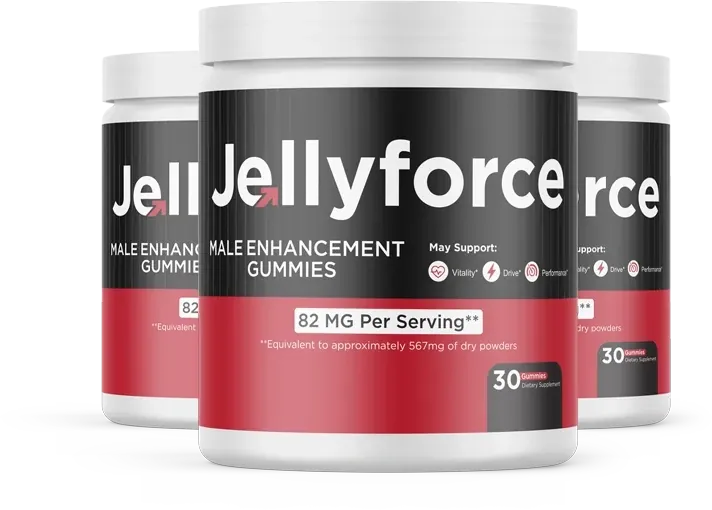
The jar prints 82 mg per serving, footnoted as about 567 mg of dry powder. Divided five different ways against the doses used in actual research, on maca, L-arginine, muira puama and ashwagandha, that figure falls short of every studied range once the serving is shared the way five named ingredients would actually share it. The ingredients aren't the problem. The expectation that this dose matches those trials is.

Doing the math the jar does not do for you
The front of the jar prints one number: 82 mg per serving. A footnote turns that into a second, larger number: about 567 mg of dry powder. Neither figure is per ingredient. Both describe the entire blend at once, however many botanicals actually belong in it, which depends which published source you believe.
Below is what happens when those two numbers are taken seriously and run against the doses used in the actual research behind each named botanical, one at a time. To keep this fair, every calculation uses the larger 567 mg figure rather than the 82 mg actually extracted, and gives each ingredient the benefit of the doubt wherever the range allows it. Read that generously, and it still runs out of room. The footnote itself, and what a conversion like it usually means, gets the fuller treatment on the supplement facts page.
Maca: the biggest gap
Maca has the most research behind it of the five, and the biggest gap between that research and this jar. Lee et al., 2023 pooled two randomized trials using maca for erectile function: 1,200 mg a day in one, 2,400 mg a day in the other, both alone, neither shared with anything else.
Set the entire 567 mg serving against just the lower of those two doses, 1,200 mg, and it comes to 47% of it, less than half. Flip it around: reaching that trial's low end would take about 2.1 times the whole serving, before maca has taken its own share of that serving rather than all of it. Shin et al., 2010 separately found only four qualifying trials existed at all, and rated even those as too limited to draw firm conclusions. This is the strongest single case in the list, and it still isn't close.
L-arginine: the best evidence, still short
L-arginine has the strongest single-ingredient evidence of the five: a pooled analysis of ten randomized trials found it improved self-reported erectile function against placebo. Srivatsav et al., 2021 cites one of those trials using 5,000 mg a day, with 31% of men on that dose reporting improvement versus 12% on placebo.
Set the entire 567 mg serving against the lower end of the range these trials actually used, 1,500 mg a day, and it comes to 38%, a little over a third. Against the 5,000 mg dose that produced the clearest result, it's 11%, under one part in eight. This is also the ingredient with the clearest safety caution attached: Schulman et al., 2006 found that 9,000 mg a day of L-arginine, given after a heart attack, significantly raised six-month mortality compared with placebo, and the trial was stopped early. That's a different dose and a different population than a daily gummy, but it's a reminder that more of an ingredient isn't automatically safer, and anyone on nitrate or blood pressure medicine should talk to a clinician before adding any L-arginine-containing product, this one included.
Muira puama: closer, on a looser number
Muira puama is where the generous reading looks, briefly, less bad. Drugs.com et al., 2026 cites a commonly referenced concentrate range of 500 to 1,500 mg a day. Set the whole undivided 567 mg serving against just the 500 mg floor of that range, and it technically clears it: 113% of it, a little more than the whole amount.
Two things take that back almost immediately. First, that range isn't backed by a controlled human trial at all: Srivatsav et al., 2021 states outright that very limited literature exists on muira puama's effect on erectile function, and that the one human study located used a multi-ingredient combination product, not muira puama by itself, so no single-ingredient dose can honestly be called effective in the first place. Second, clearing that floor requires the entire serving to belong to muira puama alone, with nothing left over for maca, catuaba, ashwagandha, L-arginine or whichever other botanicals a given published source names. A label can't have it both ways: either the serving is genuinely shared among several named ingredients, in which case none of them reach this range, or one ingredient quietly gets most of it, in which case the other names on the jar are mostly decorative.
Ashwagandha: the closest call
Ashwagandha is the nearest miss. Chauhan et al., 2022 ran an eight-week, placebo-controlled trial using 600 mg a day of a standardized root extract in 50 healthy men, and found improved self-reported sexual well-being scores against placebo. The wider range cited for sexual performance and well-being runs 300 to 600 mg a day.
Set the whole undivided 567 mg serving against the 300 mg floor and it clears it too, at 189% of that figure. Against the 600 mg dose the actual trial used, it comes to 94%, just short. But the same problem from the last section applies here with even less room to spare: 567 mg only reaches ashwagandha's floor if ashwagandha is the entire serving, and this jar names ashwagandha as one ingredient among several, not the whole formula. Split it with even one other named botanical and it drops back under 300 mg immediately.
Catuaba: no dose to divide against
Catuaba doesn't get a ratio at all, because there's no studied human dose to build one against. RxList et al., 2026 states plainly that there isn't enough scientific information available to determine an appropriate dose range for catuaba. Kletter et al., 2004 went further and tested it directly: examining 14 commercial catuaba samples, the study found most were actually the bark of a different tree entirely, and none of the preparations tested showed any effect in the standard laboratory tissue assay used to study erectile tissue relaxation.
There's no generous or ungenerous way to divide 567 mg against a number that doesn't exist. The honest answer for catuaba isn't a small share of a serving. It's that nobody has shown a share of any size does anything, at least not from the plant the name is supposed to refer to. The other four named ingredients are covered in more depth on the ingredient breakdown.
What happens once it is actually split
Two of the five comparisons above technically clear a floor, but only by handing one ingredient the entire serving and leaving nothing for the others. Nobody buying this jar gets that outcome. Whatever the real number of named botanicals actually is, they share the same 567 mg, not five separate copies of it. Here's what an even share looks like against ashwagandha's own floor, the closest range of the four, at each of the ingredient counts different published sources have used for this exact product.
| If the serving is split this many ways | Even share of the 567 mg | Share of ashwagandha's own 300 mg floor |
|---|---|---|
| 5 (the retailer pack) | 113.4 mg | 38% |
| 6 (the official sales page) | 94.5 mg | 32% |
| 8 (a brand press release) | 70.9 mg | 24% |
| 9 (a published label review) | 63.0 mg | 21% |
Swap in the smaller 82 mg figure that's actually printed as the extract weight, instead of the flattering 567 mg dry-powder conversion, and the two closer cases stop looking close at all: reaching muira puama's 500 mg floor would take roughly 6.1 times the whole 82 mg serving, and reaching ashwagandha's 300 mg floor would take about 3.7 times it. Every version of this arithmetic, generous or realistic, ends in the same place.
Small is not nothing
None of this means maca, L-arginine, muira puama, ashwagandha or catuaba are useless, and it would be dishonest to leave that impression. Ashwagandha has a real placebo-controlled trial behind it. L-arginine has the strongest single-ingredient signal of the five, a pooled analysis of ten randomized trials. Maca has been through two separate systematic reviews. Those are not nothing.
What the arithmetic above argues against isn't the ingredients. It's the expectation that a jar built this way reproduces what those trials measured. A trial that gave fifty men 600 mg of ashwagandha a day for eight weeks tells you something about 600 mg of ashwagandha a day for eight weeks. It says nothing about a fraction of that amount, shared with several other named ingredients, in a gummy taken once a day with no panel published to check the split against.
A small amount of a real ingredient can still do something small. That's a different claim than the one a jar makes just by naming an ingredient next to a footnote built to make the number look bigger than what's actually there. If what you're looking for is the dose the trials used, this jar's own math says you won't find it here, however many gummies you eat in a day, and eating more than the label says is not the fix. If new or worsening symptoms are the actual reason you're looking, that's a different, better-answered question, covered on why that's a doctor question rather than a shopping one. And if you want to see how a label like this one hides the same gap in general, not just here, that's on reading a gummy label.
Questions readers ask
Why use the 567 mg figure instead of the 82 mg printed as the extract weight?
Because 567 mg is the more generous of the two, and using the more generous number is the fairer way to test whether the dose could plausibly match the research. Even that number falls short once the serving is actually split among the named ingredients.
Does any single ingredient actually reach its studied dose?
Only if it takes the entire serving for itself, leaving nothing for the other botanicals the label names. Split fairly among several ingredients, none of the four with a studied range reach it.
Which ingredient comes closest?
Ashwagandha and muira puama both clear the very bottom of their cited ranges if read as the whole, undivided serving. Muira puama's range isn't backed by a controlled human trial in the first place, and ashwagandha's only holds if nothing else in the jar gets a share.
Why doesn't catuaba get a number at all?
Because no studied human dose exists for it to compare against. The most careful study located tested it directly and found no effect from any preparation, after first finding most commercial catuaba is a different bark than advertised.
Does this mean the ingredients don't work?
It means this jar's math doesn't match the doses those ingredients were actually studied at. Several of them have real research behind them at their studied amounts. This product's serving isn't that amount.
Would eating two or three gummies a day fix the gap?
No, and the label doesn't suggest that either. Published listings describe one gummy as the serving, and multiplying a small number by two or three still leaves it well under most of the studied ranges above.
What should actually change based on this math?
Mainly expectations, not necessarily the purchase. A modest amount of a real ingredient can still do something modest. It just isn't the same claim as matching a clinical trial.
Keep reading
Reading a gummy label
How to read any supplement gummy label: serving size traps, what a blend total hides, the dry-powder-equivalent trick, s...
Read →Why ED is a doctor question
Why new or worsening erectile difficulty is worth a doctor's visit first: the vascular explanation, common causes, and w...
Read →How much does Jelly Force cost?
Pack sizes, days of supply and how to pick the right one.
Read →Order Jelly Force from the authorized retailer
60 servings per bottle, 1 to 2 droppers a day. Kits of 2, 3 or 6 bottles run from $49 a bottle on the sales page, with a 60-day money-back guarantee. Questions first? Call +1 (302) 200-3480.